

Ansys Sherlock – an easy, multiphysics approach for PCB reliability and lifetime prediction
Ansys Sherlock is a powerful tool for PCB reliability analysis, enabling designers to predict the lifetime of PCB components under lifecycle events such as shock, vibration, and thermal cycling. Sherlock simplifies and accelerates multiphysics analysis by offering built-in simulation options (e.g., solder fatigue, random vibration) in an intuitive interface suited for both PCB designers and mechanical simulation experts. In this webinar, we’ll show how linking Sherlock with other Ansys simulation tools increases value and accuracy. Integrating Sherlock into your workflow reduces pre-processing time by auto-generating simulation-ready 3D PCB models. Accuracy is further improved by importing results from external thermal or mechanical simulations, incorporating detailed boundary conditions or additional components beyond the PCB.
Evan Smuts
Senior Engineer
Evan Smuts is a Senior Engineer at Qfinsoft, specialising in Ansys HFSS, Computational Fluid Dynamics (CFD), and Finite Element Analysis (FEA), delivering advanced simulation solutions across electromagnetic and multiphysics applications.
Related Resources

Accelerate your simulations with Ansys Cloud Burst, the secure, on-demand high-performance computing (HPC) solution built directly into Ansys software. With Ansys Cloud Burst, engineers can scale simulations instantly, run larger models, and achieve results faster without any IT setup, hardware investment, or infrastructure constraints.
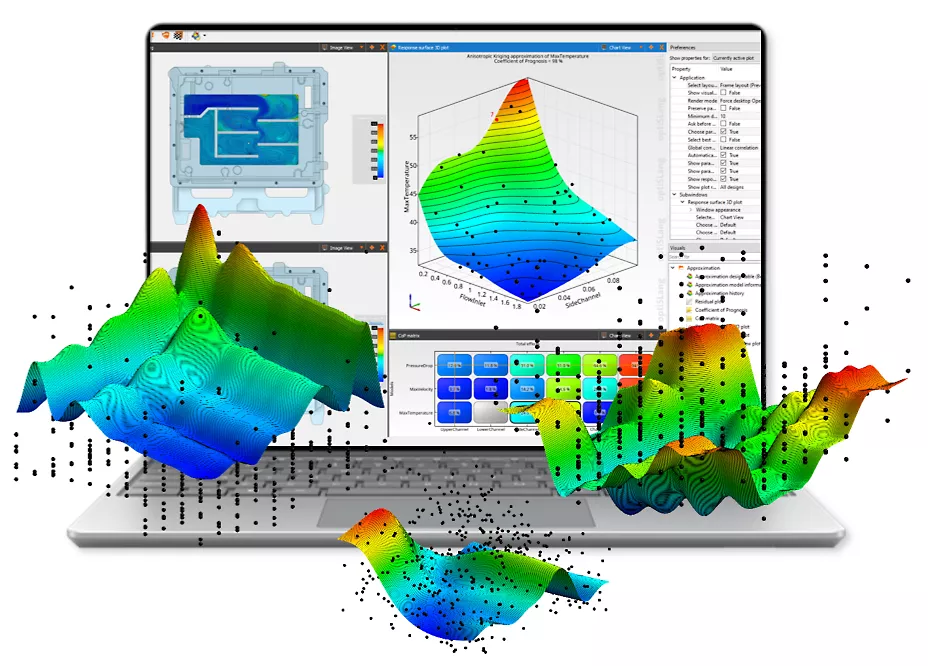
In this session, we’ll introduce optiSLang Base, explore its new wizards, response surfaces, and evolutionary optimisation features, and demonstrate how easily engineers can apply them within Mechanical.
-
In this webinar, we’ll show how linking Sherlock with other Ansys simulation tools increases value and accuracy. Integrating Sherlock into your workflow reduces pre-processing time by auto-generating simulation-ready 3D PCB models.
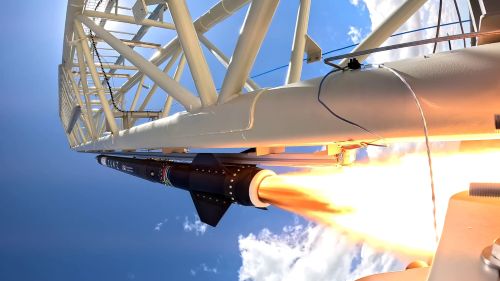
The Aerospace Systems Research Institute (ASRI) is advancing South Africa’s space ambitions through record-breaking rocket projects and world-class student research. From hybrid sounding rockets to an orbital-class liquid engine, the ASRI team is using advanced simulation to design, test, and manufacture the next generation of aerospace technologies for Africa.